Pinterest and the Architecture of Visual Discovery in Creative Ecosystems
How curated imagery reveals aesthetic structure and expands discovery across digital ecosystems.
Inside This Framework
Visual Cognition and Creative Orientation — why many creatives recognise alignment through imagery before language forms.
Curated Images as Pattern Signals — how collections of images reveal recurring aesthetic structures and tonal patterns.
Translating Visual Patterns into Brand Direction — interpreting curated imagery as signals for typography, atmosphere, and design systems.
Pinterest as a Visual Index — understanding the platform as a discovery infrastructure rather than a social feed.
Recognition Before Articulation — the role visual environments play in clarifying identity and direction.
Discovery Through Images — how visual assets become entry points into creative ecosystems.
Long-Horizon Visibility Systems — why images circulate across the web for years rather than disappearing in algorithmic feeds.
Architectural Application — translating visual discovery into coherent ecosystem design.
Visual environments often reveal patterns before language does
Creative work frequently begins with recognition rather than articulation. Alignment is often recognised visually long before the underlying structure can be described in precise language.
Images communicate atmosphere, tone, and aesthetic relationships immediately. Colour, composition, texture, and spatial balance are processed intuitively, allowing patterns to surface through visual exploration before formal brand language exists.
This is one reason platforms such as Pinterest remain widely used within creative disciplines.
Within digital ecosystems, these images function as pathways — guiding attention toward portfolios, articles, and creative environments beyond the platform itself.
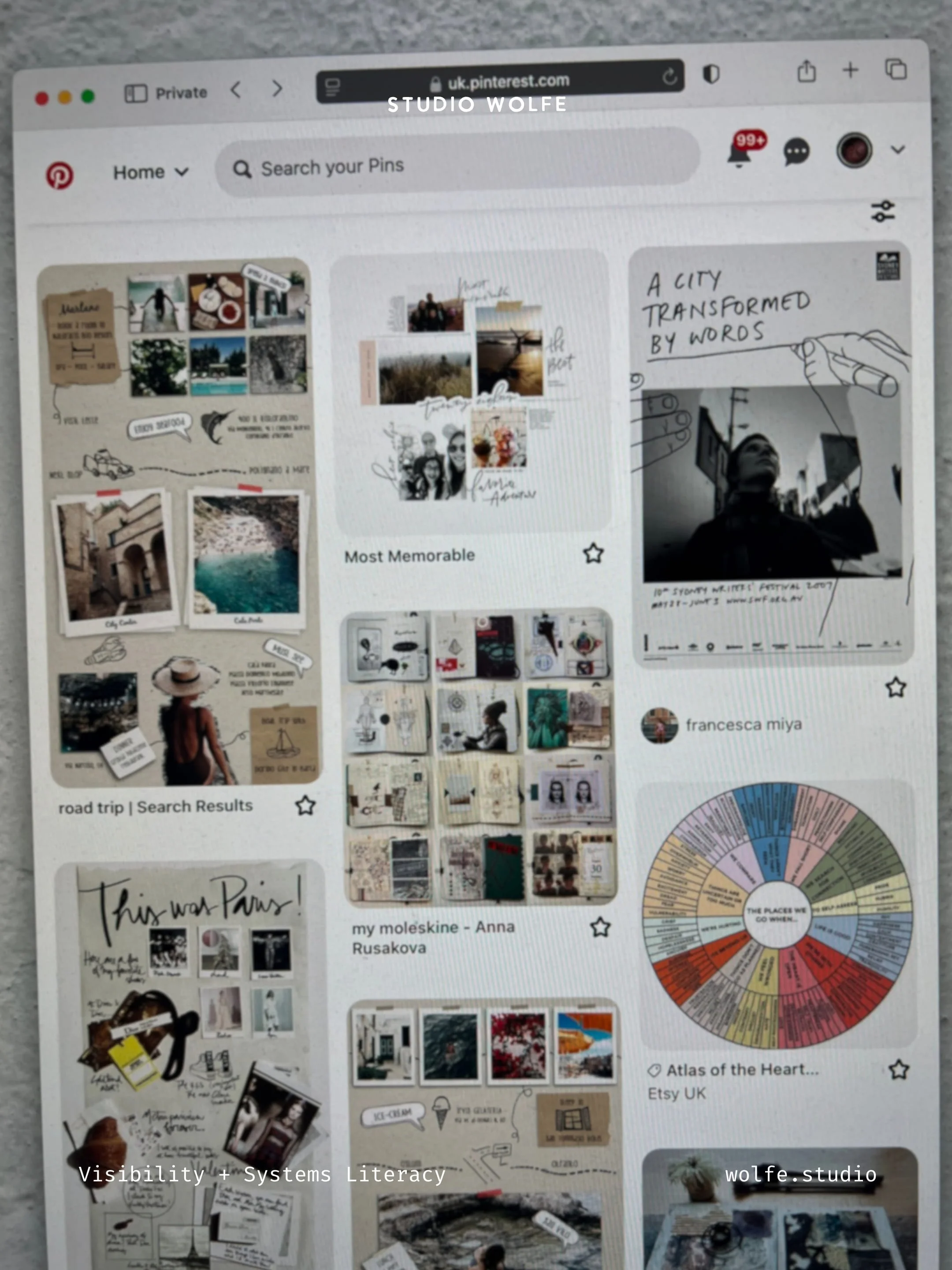
While often grouped with social media, Pinterest behaves differently. It functions primarily as a visual discovery environment where curated imagery, search behaviour, and saved collections expose relationships between ideas.
Collections of images begin to reveal signals that are difficult to articulate in words:
Tonal atmosphere
Colour relationships
Compositional rhythm
Material language
What initially feels intuitive becomes visible.
What becomes visible can be interpreted.
For creative and design practices this stage is valuable. Curated boards expose aesthetic instincts that may otherwise remain unspoken. Studios interpret these signals — identifying patterns, contradictions, and recurring tonal atmospheres within the collection. From there the signals can be translated into structure: environments where typography, layout, imagery, and spatial rhythm begin to reflect the deeper aesthetic logic of the work itself.
Recognition reveals the signal.
Interpretation gives it form.
Visual Recognition and Creative Orientation
Ideas within creative disciplines are often recognised visually before they are articulated verbally. Atmosphere, tone, and aesthetic alignment are frequently sensed instinctively, even when those qualities cannot yet be described precisely.
When brand voice or visual direction is introduced too early in a process, the conversation can feel forced. Language appears before the underlying patterns have been recognised.
Visual curation environments allow this recognition stage to unfold naturally. By gathering images that resonate, intuitive preferences begin to surface in visible form.
These curated collections often reveal patterns across several visual dimensions:
Tonal atmosphere
Colour temperature
Spatial composition
Material language
Photographic tone
What becomes visible can be interpreted.
Interpretation reveals structure.
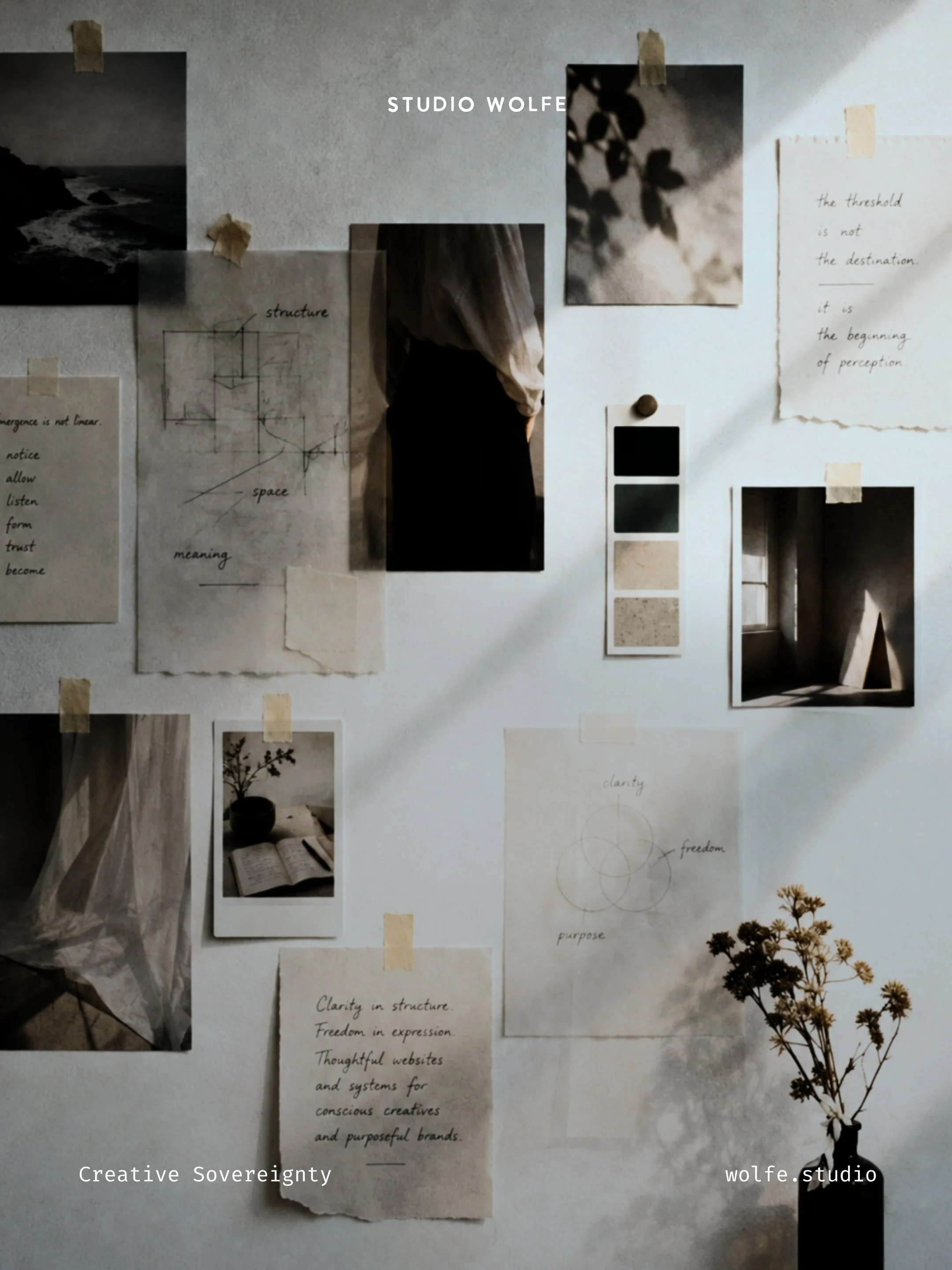
The board becomes a thinking surface.
Curated Images as Pattern Signals
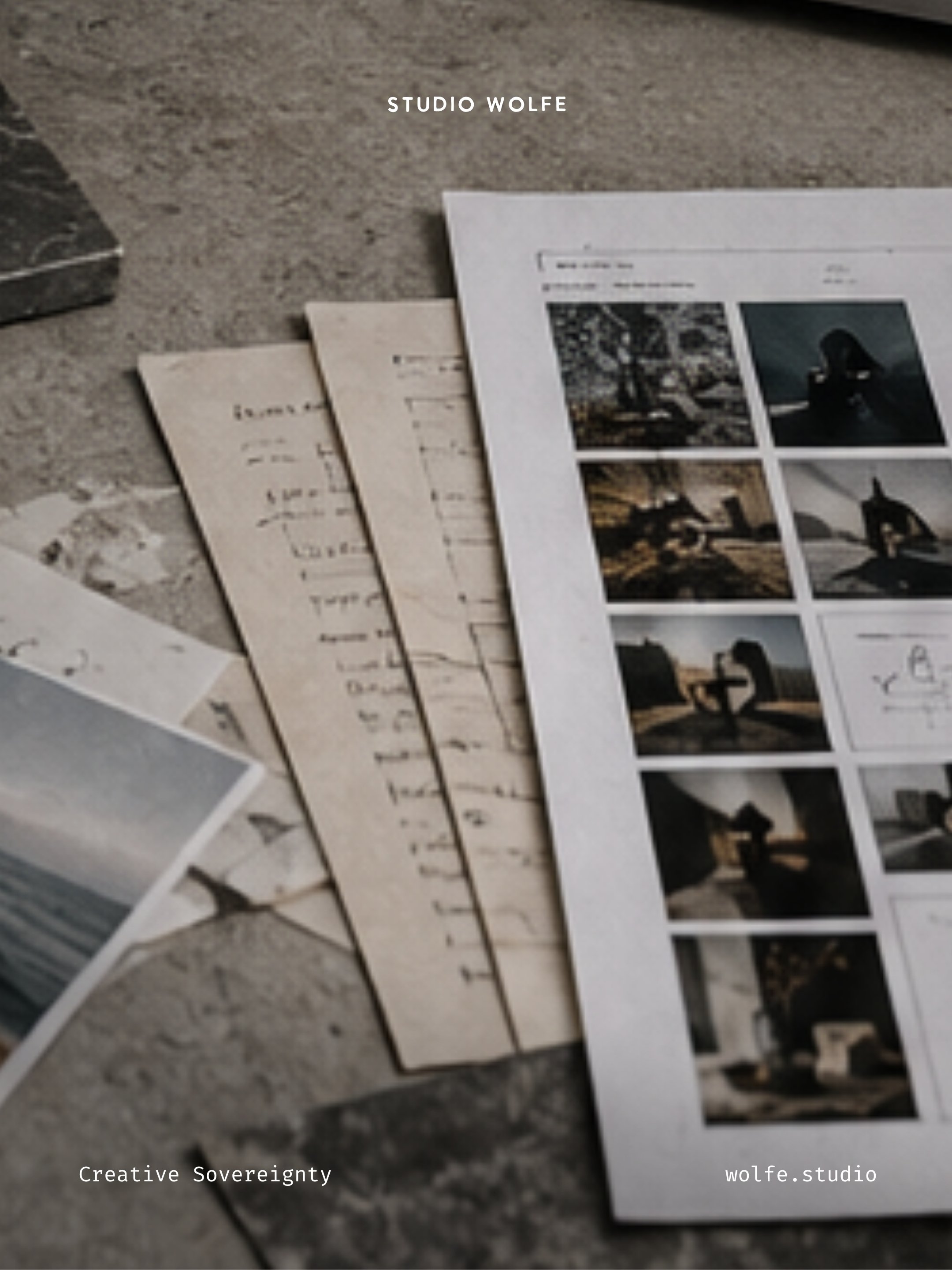
When images are gathered together, relationships begin to appear.
Colour temperatures repeat across different contexts. Material textures emerge as recurring themes. Compositional structures reveal shared spatial preferences.
What initially appears to be a collection of individual images gradually reveals a visual structure.
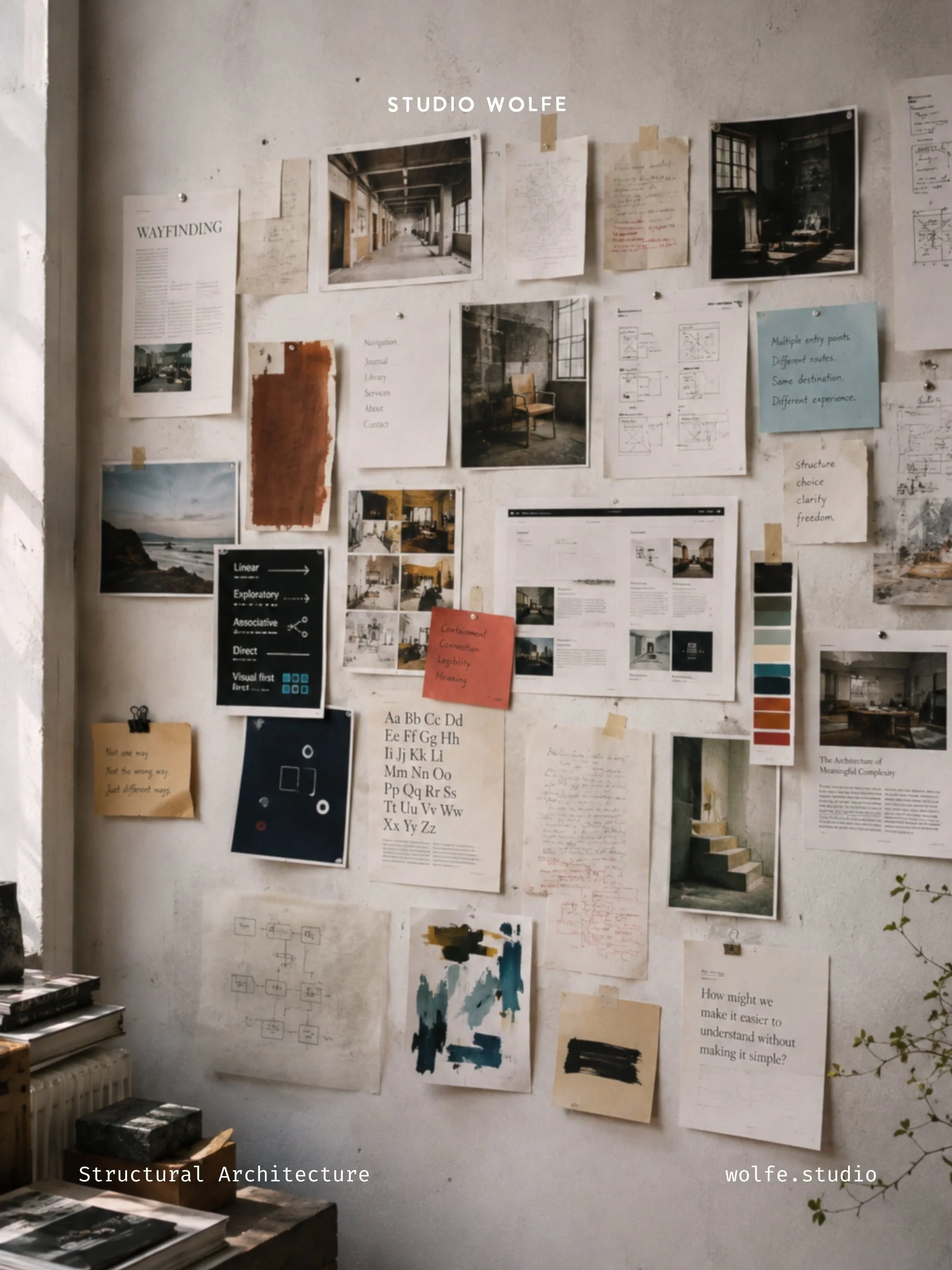
For creative and design practices, these boards function as visual datasets. They expose structural signals that inform decisions about atmosphere, visual hierarchy, typography, and spatial rhythm.
A board that initially appears inspirational quickly becomes diagnostic.
Certain images feel immediately aligned.
Others introduce subtle friction.
Those tensions are valuable. They often reveal the difference between aesthetic attraction and structural coherence.
Studios examine these collections to identify:
Recurring aesthetic patterns
Tonal atmosphere
Compositional density
Contradictions between selections
Emerging visual language
The purpose of the board is not simply inspiration.
It is recognition.
Translating Visual Patterns into Brand Direction
Once patterns become visible, they can begin informing design decisions.
Recurring colour palettes may signal tonal atmosphere — mineral neutrals, coastal blues, muted botanical greens. These signals often influence the eventual colour system of a brand environment.
Material relationships visible across images suggest broader aesthetic language. Stone, linen, timber, and natural textures often align with calm editorial environments, while metallic surfaces, glass, and architectural geometry may suggest a more structured visual tone.
Compositional density also carries meaning.
Boards dominated by spacious imagery and quiet negative space often translate into environments defined by:
Restrained typography
Generous margins
Slower visual rhythm
Calm editorial layouts
More layered collections may signal the need for stronger visual hierarchy and denser compositional rhythm.
Typography direction frequently emerges indirectly. Editorial imagery often aligns with refined serif systems, while contemporary architectural imagery may support sharper typographic structures.
Through this process, visual instincts gradually become design architecture.
What begins as intuitive image gathering begins to influence:
Typography systems
Colour architecture
Layout rhythm
Photographic tone
Emotional atmosphere
The board reveals the language.
The pattern is translated into structure.
Pinterest as a Visual Index
While frequently described as social media, Pinterest behaves more like a visual search system.
Images are indexed, categorised, and continuously rediscovered through associative exploration. Users are not confined to chronological feed behaviour; they can move through search, saved boards, visual similarity, and related ideas.
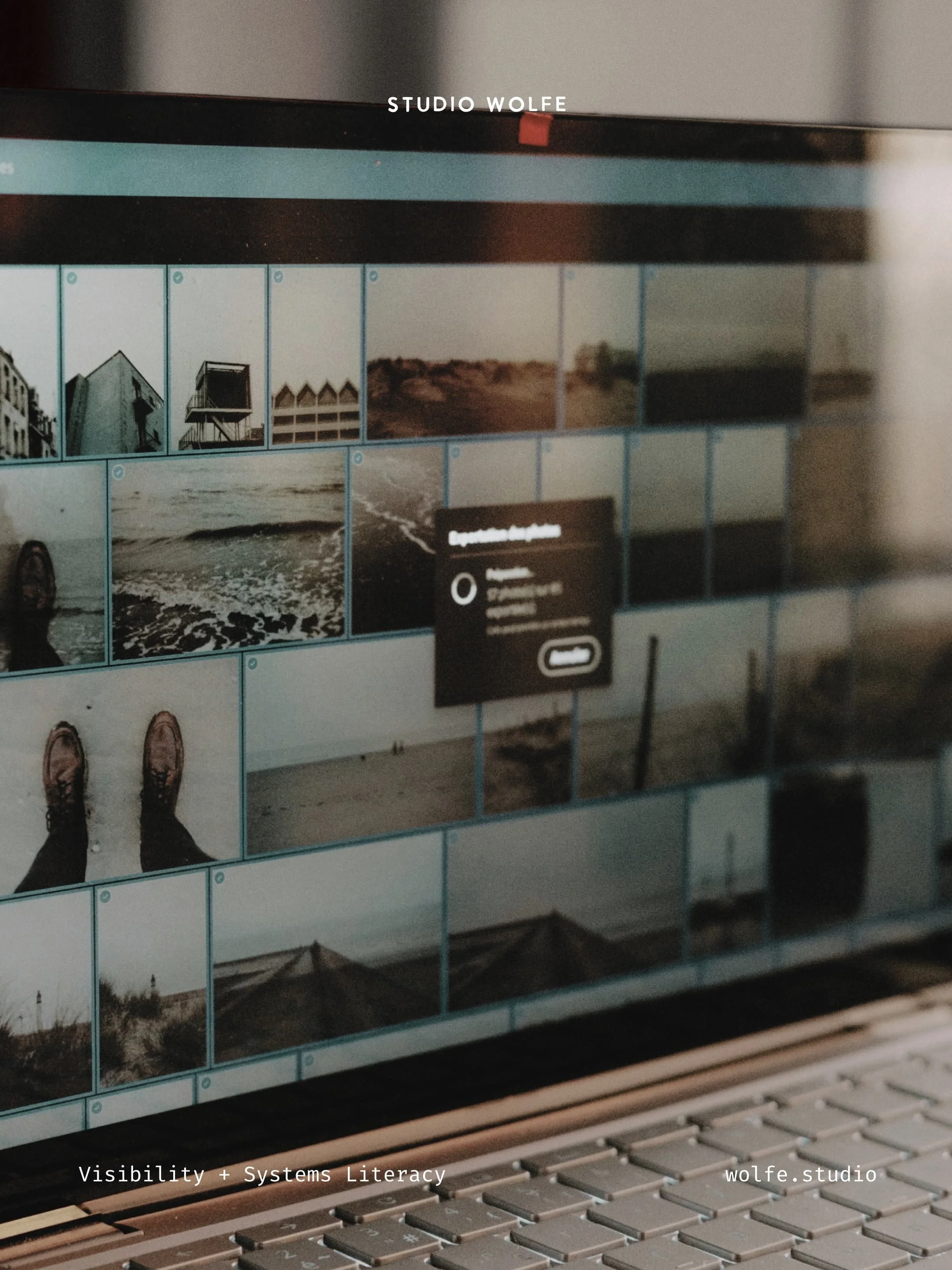
This creates an environment where visual assets can circulate and resurface over extended periods of time. Pins can remain discoverable well beyond their original publication when they continue to align with searches, saves, and related visual contexts.
For creative ecosystems this behaviour has structural implications. Images become entry points that connect external audiences to portfolios, articles, and creative environments beyond the platform itself.
Pinterest therefore functions less as a broadcast platform and more as a visual discovery infrastructure.
Recognition Before Articulation
Visual recognition often precedes strategic articulation.
Images provide a language that allows atmosphere, tone, and aesthetic coherence to be explored without forcing premature verbal definitions.
When curated boards are discussed collaboratively, they create a shared reference environment. Conversations move away from abstract descriptions and toward tangible visual signals.
From there, studios can identify recurring themes, contradictions, and alignments within the curated material. These insights inform structural decisions about how a digital environment should feel and function.
Pinterest therefore becomes a bridge between instinct and articulation.
At the level of creative orientation, the structural role of a creative manifesto helps translate instinctive recognition into principles that can guide the wider ecosystem.
Discovery Through Images
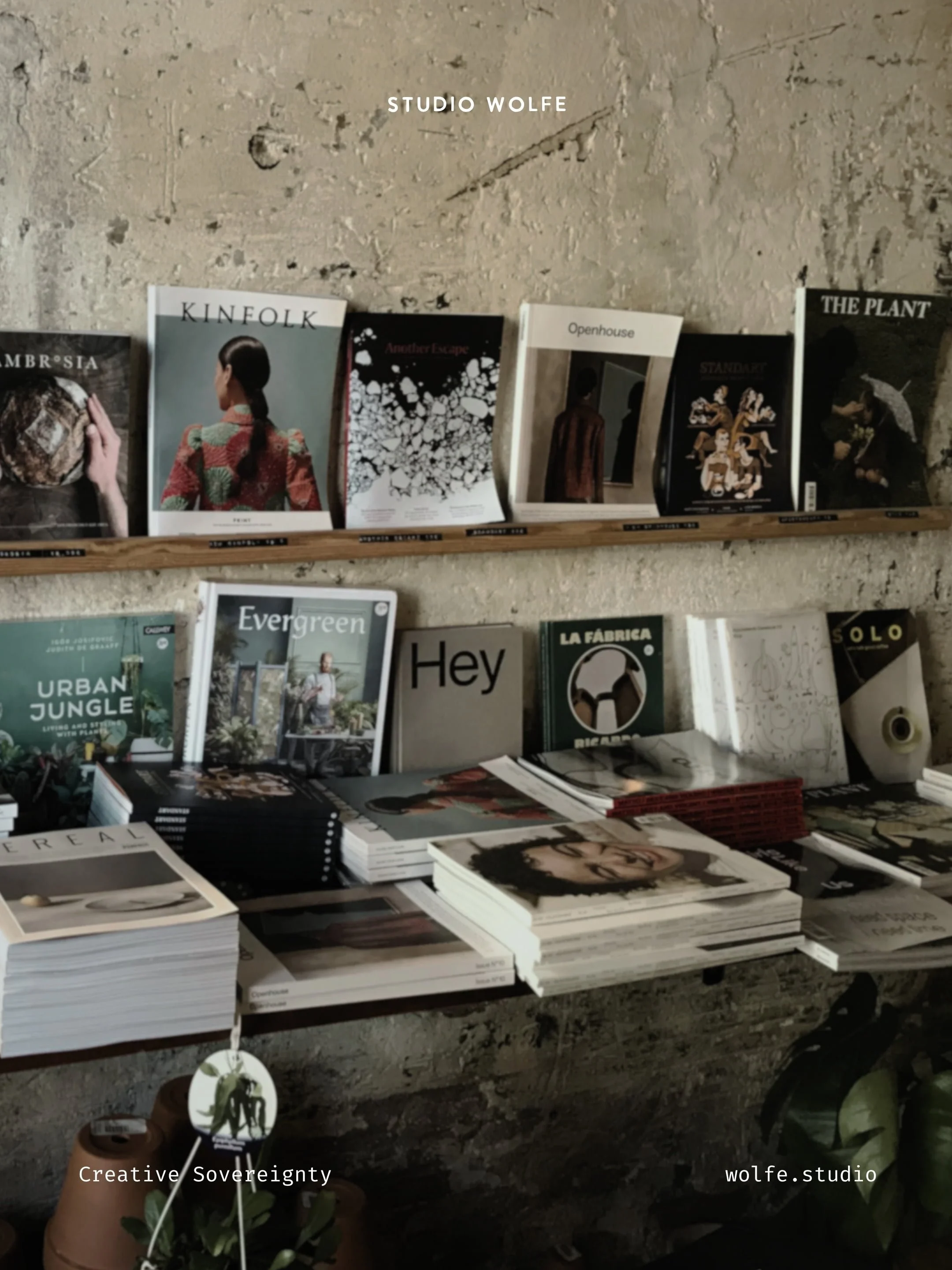
Across the web, images function as discovery nodes.
Search engines index them. Visual platforms circulate them. Users save and share them across collections of ideas.
This behaviour creates pathways into creative ecosystems that operate independently of traditional search or chronological feeds.
A single image may lead a visitor from a curated board to a portfolio project, an editorial article, or a broader body of work.
For creative ecosystems, this creates an additional discovery layer.
Visual assets published on a website do not remain confined to that environment. They circulate through external platforms where they continue guiding new audiences back toward the original ecosystem.
Images therefore become structural connectors between platforms.
Long-Horizon Visibility Systems
Unlike platforms organised primarily around fast-moving feeds, visual discovery platforms can operate across longer time horizons. Pins and images can resurface repeatedly as users explore related ideas, styles, or concepts.
For creative ecosystems this creates distributed visibility. Images continue circulating long after they were first published, extending the reach of portfolios, editorial content, and design work over time.
This behaviour reframes visual assets as infrastructure rather than decoration.
Images prepared carefully — through clear composition, contextual placement, and descriptive metadata — can remain discoverable across visual search systems over extended periods.
Visual Systems and Digital Environments
When visual discovery is understood structurally, its relationship to website design becomes clearer.
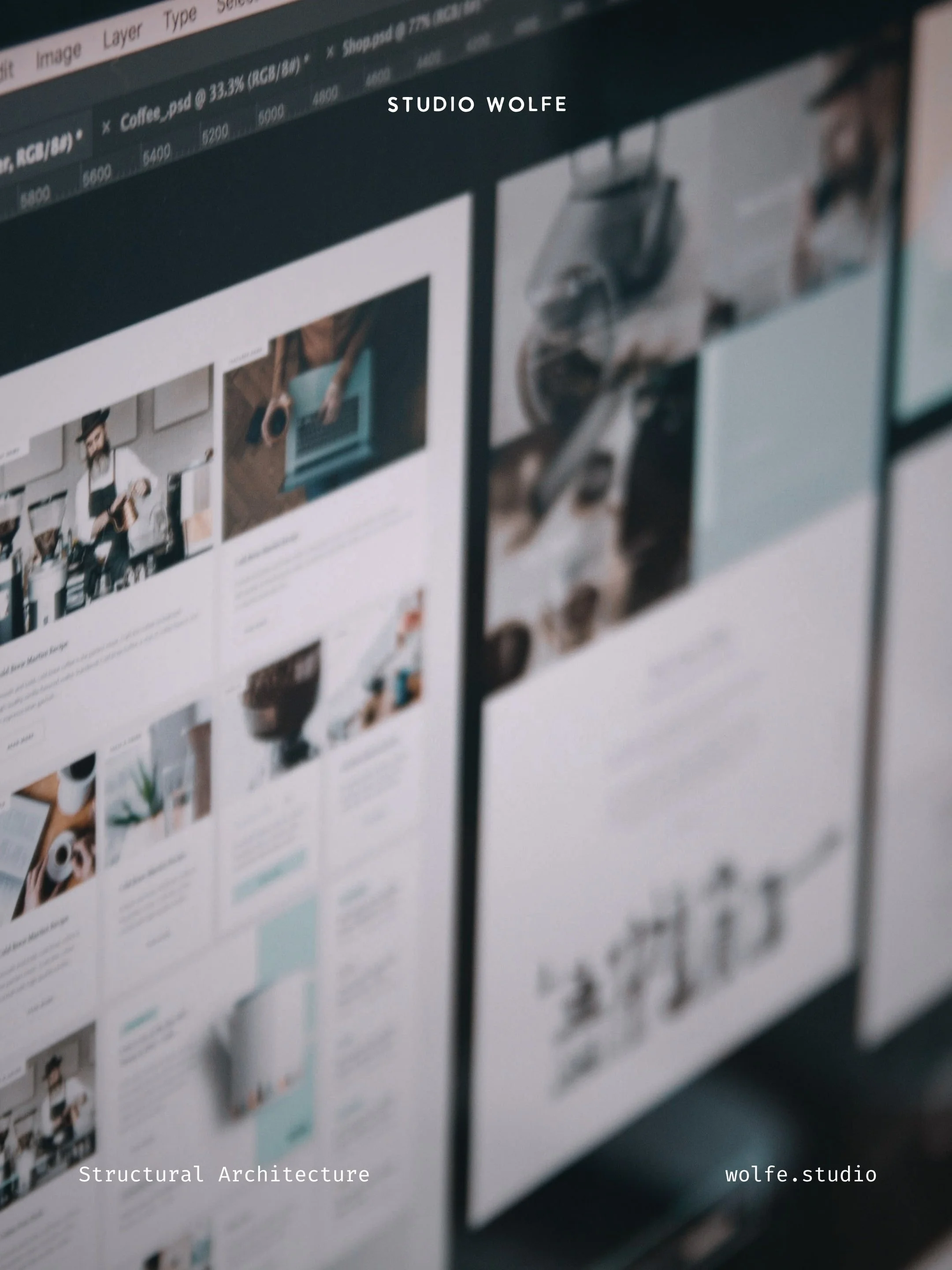
Websites are not isolated pages but environments composed of interconnected visual systems. Portfolio images, editorial photography, and article illustrations all participate in wider discovery networks across the web.
A portfolio project published on a website may later appear within image search results, curated boards, or visual collections exploring related ideas.
In this way, a website’s visual system extends beyond the site itself.
Images travel.
They circulate through visual search systems, discovery platforms, and curated environments. Each image becomes a potential pathway back toward the original ecosystem.
Creative and design practices therefore benefit from treating imagery as part of the architectural layer of a digital environment.
When visual systems are coherent, three structural advantages tend to emerge:
A recognisable aesthetic language across pages
Stronger discovery pathways through visual platforms
A more cohesive atmosphere across the entire ecosystem
Pinterest simply reveals this behaviour more clearly than most platforms.
Related thinking on how digital environments function as interconnected systems can be explored further in Mapping Digital Ecosystems, which examines how websites, visual platforms, and external discovery layers interact over time.
Architectural Application
Viewing visual discovery through a structural lens changes how creative environments are designed.
The following principles translate visual curation into architectural thinking.
01. Recognition Before Articulation
Visual alignment often appears before language can describe it.
Allow creatives to gather imagery that resonates before forcing early definitions of brand voice or visual identity. Recognition often reveals the deeper aesthetic instincts that language struggles to capture.
Recognition is the beginning of structure.
02. Treat Curation as Pattern Analysis
Curated boards are not merely collections of inspiration. When examined carefully they reveal recurring signals that expose deeper aesthetic structures.
Patterns typically appear across several signals:
Colour relationships
Tonal atmosphere
Compositional density
Material language
These patterns often reveal the visual logic of a brand before it has been articulated verbally.
03. Translate Visual Signals into Design Systems
Once patterns appear, they must be translated into coherent design architecture.
Colour palettes inform visual hierarchy. Spatial compositions influence layout density. Photographic tone shapes the emotional atmosphere of a digital environment.
Visual instinct becomes structural system.
04. Images Function as Discovery Nodes
Across the web, images act as entry points into creative ecosystems. A single image can lead a visitor toward a portfolio project, an article, or a broader body of work.
Images travel across platforms.
Discovery expands with them.
05. Design Images With Structural Intent
Images are not decorative elements. They are structural components of digital environments.
File preparation, visual clarity, and contextual placement all influence how images are interpreted, indexed, and rediscovered across platforms.
When images are prepared intentionally, they become part of the architecture of visibility. This connects directly to image optimisation for performance and accessibility, where file preparation, metadata, and visual clarity support how images are interpreted across digital systems.
Architectural Synthesis
Visual discovery environments reveal how creative ecosystems travel across the modern web.
Images do more than illustrate ideas. They reveal patterns in aesthetic thinking while simultaneously acting as entry points into digital environments.
Platforms such as Pinterest provide a surface where recognition can occur before articulation. Imagery is gathered instinctively as visual signals begin to surface. Studios interpret those signals and translate them into structure.
Recognition.
Interpretation.
Architecture.
Seen through this lens, Pinterest is neither a trend-driven marketing channel nor simply a source of inspiration. It is part of a wider visual discovery system through which creative ecosystems are recognised, explored, and rediscovered over time.
STUDIO WOLFE JOURNAL
This article sits within the exploration of visibility systems — part of Studio Wolfe’s structural framework for designing and developing coherent digital ecosystems. Explore related Journal posts within the archive or enquire about bespoke ecosystem architecture through Studio Wolfe.